Rent is more than a monthly payment- it keeps a Community Running.
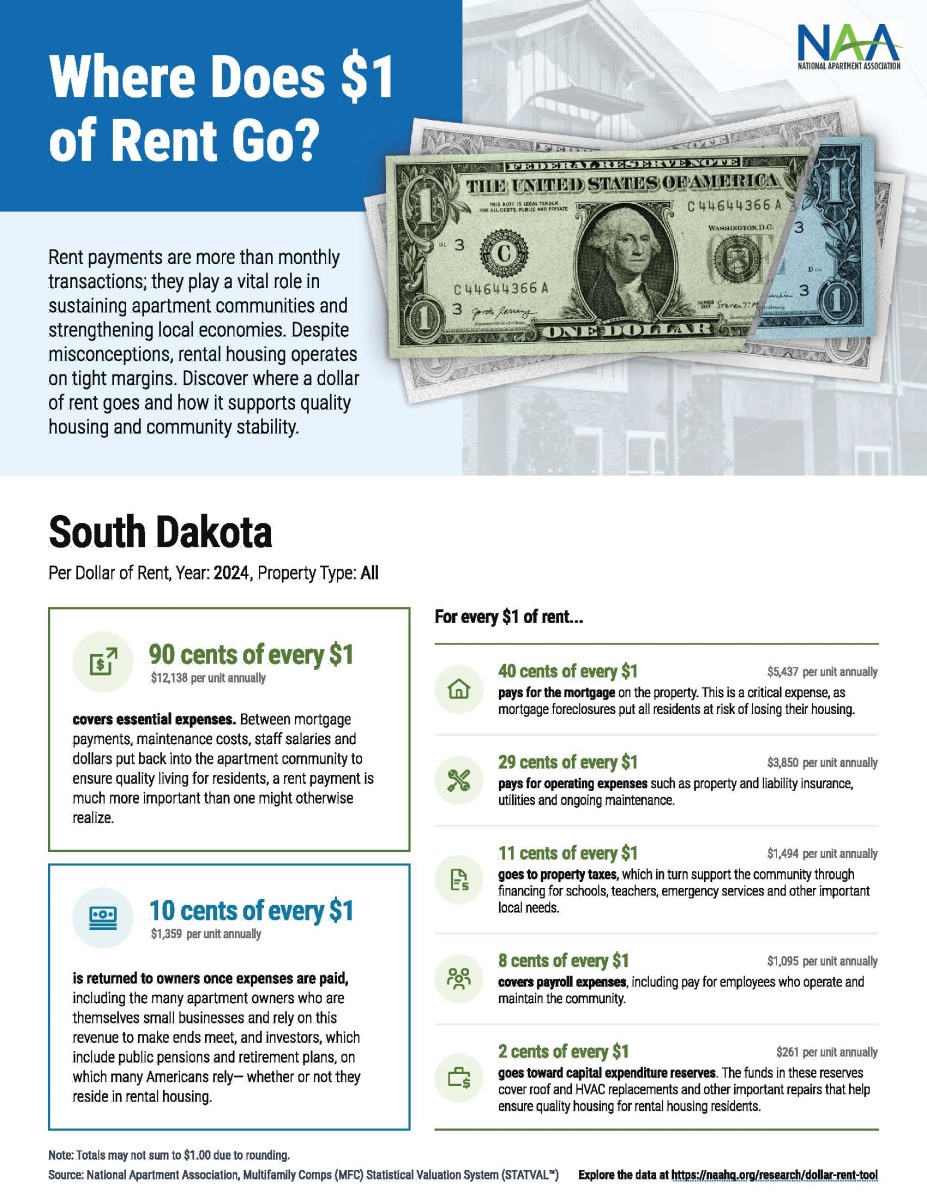
According to the National Apartment Association's latest analysis, 90 cents of every dollar of rent in South Dakota goes toward essential costs.
For multi-family owners, investors, and property managers, every dollar has a job to do. The takeaway is rent is revenue, but it is not profit. Understanding where each dollar goes is essential to evaluating property performance, planning capital investments, and maintaining financially sustainable communities.
Here’s the South Dakota picture:
40¢ — Mortgage
Helps keep the property financed and housing available to residents.
29¢ — Operating expenses
Covers the everyday costs of running a community—including maintenance, insurance, and utilities.
11¢ — Property taxes
Supports local services such as schools, emergency services, and other community needs.
10¢ — Owners' return
Returns to owners' risk after all expenses are paid.
8¢ — Payroll expenses
Covers pay for employees who operate and maintain the apartment and rental communities.
2¢ — Capital expenditures reserves
Covers roof, HVAC, elevator, and other replacements and repairs to ensure quality housing for residents.
NAA President & CEO Bob Pinnegar: “This data underscores that, while often mischaracterized, rental housing is a narrow-margin industry – one that delicately balances the business of housing with the humanity of home. These findings must be a central part of the conversation as we work with policymakers to craft informed and responsible housing policy solutions.”
The story varies by state. NAA's 2026 analysis is based on data provided by STATVAL™ that includes more than 150,000 operating statements and 45,000 lender-underwritten appraisals from 2023-2024 in 44 states and Washington, DC. With the multi-family rental industry operating on tight margins, rising costs do not simply disappear; they directly affect the resources available to maintain properties, invest in improvements, and sustain a long-term housing supply.
|